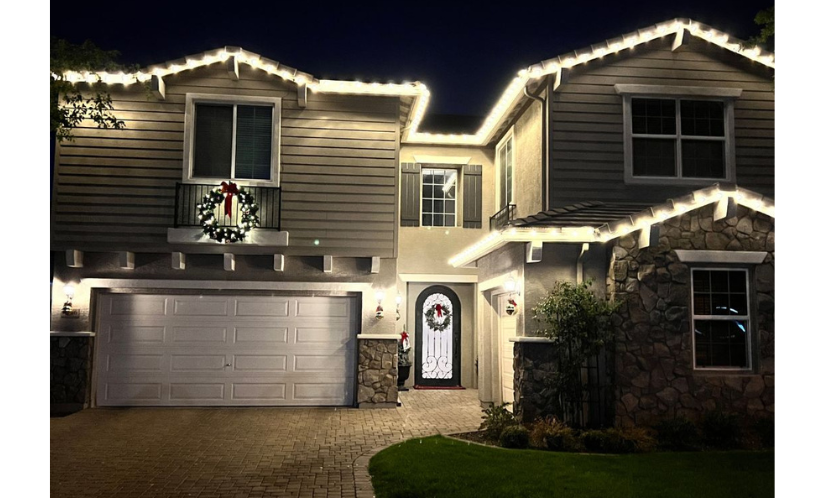
Chicago ice storms tear apart cheap lighting installs. There are three things we do during install that most low-cost crews skip. Here is what they are and why they matter.
The single biggest source of lighting failures we see during the holiday season is not snow. It is ice. A heavy ice storm in late December or early January can rip an entire run of cheap lights off the roof in a single night. Once it happens, the homeowner is left looking at a half-lit house through the rest of the holidays.
This is preventable. Here are the three things we do during install that most low-cost crews skip.
1. We Use Clip Systems Rated for Ice Load
Cheap installs use staples, hot glue, or generic plastic clips that grip the gutter or fascia weakly. Under the weight of accumulated ice, the clip releases and the entire run comes down.
We use commercial grade clip systems that grip the roof edge, gutter, or fascia under load. The clips are rated for ice and snow weight specific to the climate zone. They do not pop off when temperatures drop.
This is not exotic. It is the standard for professional installs. The reason most low-cost crews skip it is cost per clip. Better hardware costs more, and on a thin-margin install, that adds up. We do not cut that corner.
2. We Design Drainage Paths
Roof valleys, dormer joins, and gutter edges are where ice accumulates first. A run of lights mounted directly through a known drainage path is asking for trouble.
When we design an outline, we route around drainage paths. Lights that need to cross a valley get routed around it on the higher edge of the dormer or the closer pitch. Gutter runs get evaluated for ice dam risk before we attach anything.
This is the part most cheap installs skip entirely. The crew shows up, runs the line along whatever edge is easiest, and leaves. When the ice forms, the gutter strains, the lights come down, and the homeowner pays for it.
3. We Run Proactive Sweeps After Major Weather
This is the post-install part. When a major ice storm rolls through the south or southwest suburbs (and they happen at least once or twice a winter), our crews are on the road the next morning checking client properties without waiting for a call.
If a clip released, we re-secure it. If a bulb broke, we replace it. If a section needs to come down for safety, we handle it.
This is included with every install. We do not charge for in-season service calls. We expect to be on site a few times during the winter handling weather-related touch-ups. That is built into how we price and how we operate.
Cheap installers disappear after install day. They are gone. When the ice hits, you are on your own.
The Cost Difference
A professional install with commercial grade hardware and included in-season service costs more than the cheapest option on the market. That is true. The question is what you are buying.
If you want lights that survive the worst Chicago winter has to offer and a crew that shows up when they fail, this is what you pay for. If you want the lowest sticker price and you are willing to climb a ladder in January, the cheap option exists.
Most of our clients have tried the cheap option at least once before calling us. They do not go back.